Insurance & Owner-Operator Business
Trucking Insurance Coverage Comparison for Owner-Operators
Primary liability, cargo, physical damage, bobtail, non-trucking liability, general liability, and trailer interchange protect different risks. Here is how to compare them without confusing the names.
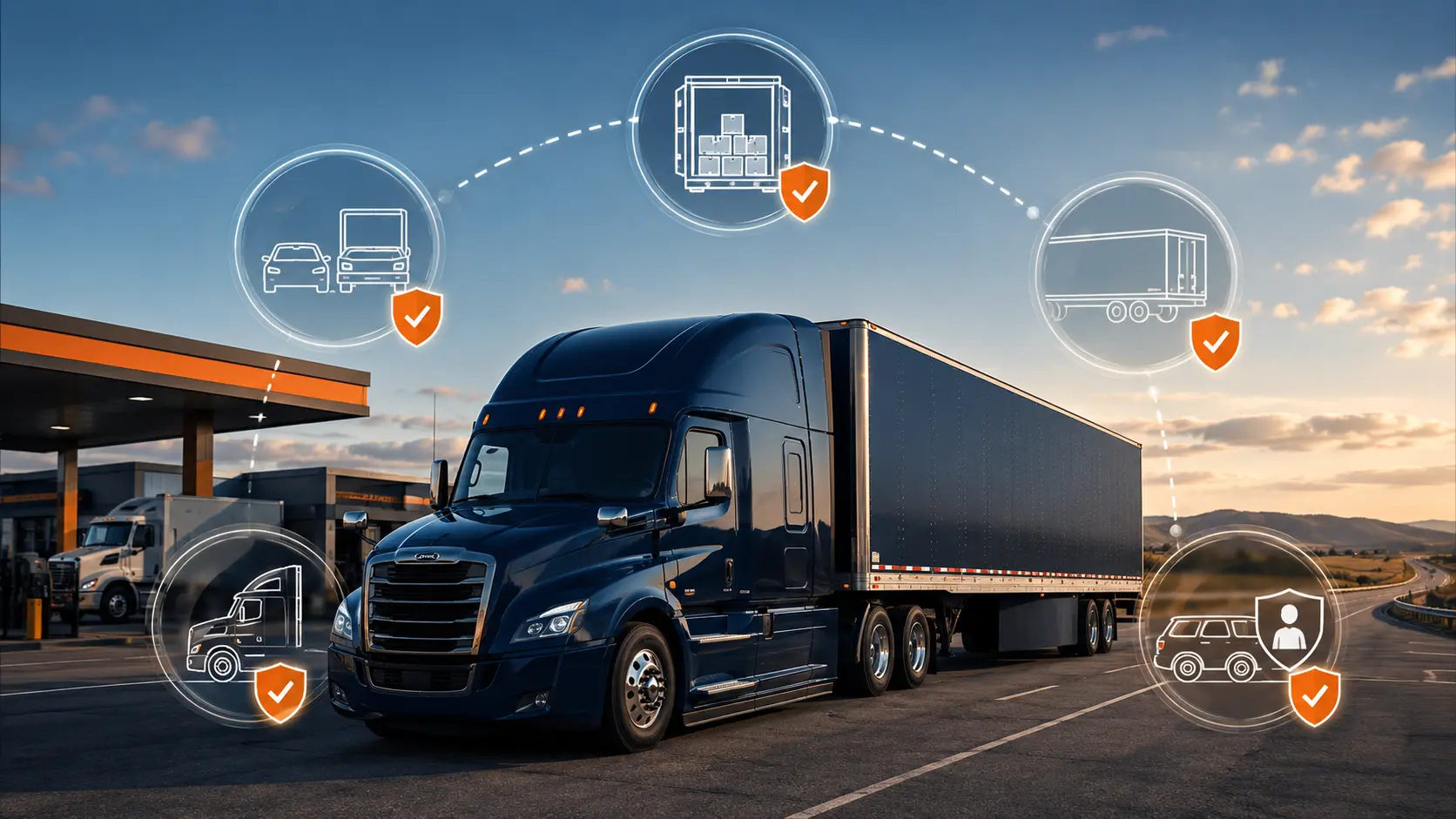
Truck insurance is not one blanket policy. A coverage that pays for damage your truck causes to another person may do nothing for the freight, your tractor, or a borrowed trailer. The correct package depends on whether you operate under your own authority or lease to another motor carrier, what you haul, who owns the equipment, your contracts, and the exact policy wording.
This comparison explains the purpose of common coverages; it does not rank insurers or recommend limits. Prices are not included because carriers receive individualized quotes based on factors such as authority history, drivers, equipment, radius, cargo, loss history, garaging location, limits, deductibles, and payment terms.
Coverage comparison at a glance
| Coverage | Main subject | Typical use | Does not automatically cover |
|---|---|---|---|
| Primary auto liability | Other people and their property | Business operation of scheduled commercial vehicles | Your tractor, trailer, or cargo |
| Motor-truck cargo | Freight in your care | Covered loss or damage during transportation | The tractor or every commodity/cause |
| Physical damage | Your insured equipment | Collision and selected non-collision loss | Cargo or liability to others |
| Non-trucking liability | Liability to others | Personal, non-business use by a leased owner-operator | Business use, cargo, or truck damage |
| Bobtail | Liability while no trailer is attached | Tractor operated without a trailer, depending on wording | All off-duty or all business situations |
| General liability | Certain business-premises and operational claims | Non-auto exposures defined by the policy | Commercial-auto liability |
| Trailer interchange | A non-owned trailer | Trailer held under a written interchange agreement | Your tractor or every non-owned trailer arrangement |
1. Primary auto liability protects the public—not your truck
Primary commercial-auto liability is designed to address covered bodily injury and property damage the insured operation causes to others. It is the central coverage tied to a for-hire carrier's operating authority. It should not be confused with physical damage, which concerns the insured tractor or trailer.
FMCSA's current insurance filing table lists $750,000 in bodily-injury and property-damage financial responsibility for non-hazardous, for-hire property carriers operating freight vehicles rated at 10,001 pounds or more. Certain hazardous materials require $1 million or $5 million under 49 CFR § 387.9.
A federal minimum is not a promise that $750,000 will satisfy every broker, shipper, lease, lender, state, or operation. Many contracts request a higher limit. Only an authorized insurer or surety files the applicable BMC form with FMCSA; a certificate emailed by the carrier is not the federal filing.
2. Motor-truck cargo concerns the load—not the tractor
Motor-truck cargo coverage is intended for covered loss or damage to freight while it is in the carrier's custody. A policy can include limits, deductibles, commodity restrictions, unattended-vehicle requirements, territorial restrictions, sublimits, refrigeration terms, or exclusions for particular causes of loss.
FMCSA's March 26, 2026 filing table shows no federal cargo-insurance filing requirement for a general non-household-goods property carrier. Household-goods carriers have separate federal cargo filing requirements. Even when FMCSA does not require a cargo filing, a broker or shipper may require cargo insurance by contract.
A $100,000 limit on a certificate does not prove that every $100,000 load is protected. Ask the agent to confirm the commodity, maximum value, theft conditions, water damage, loading and unloading, debris removal, earned freight, unattended storage, and any exclusions that matter to the lanes you actually run.
3. Physical damage protects scheduled equipment
Physical damage generally combines collision protection with a form of non-collision protection such as comprehensive or specified-perils coverage. It may help repair or replace the scheduled tractor or trailer after a covered loss, subject to valuation terms, deductibles, exclusions, and limits.
Physical damage is not the same as liability and is not the same as cargo insurance. A financed or leased truck agreement may require it even when federal motor-carrier regulations do not. Review whether the settlement basis is stated value, actual cash value, or another method; confirm permanently attached equipment; and ask how towing, storage, glass, downtime, and rental reimbursement are handled.
Do not set a stated amount only to lower premium without understanding how a claim would be valued. Give the agent accurate purchase, equipment, garaging, and operating information and retain the signed application.
4. Non-trucking liability and bobtail are not interchangeable
These labels cause frequent confusion. Progressive Commercial's glossary describes bobtail coverage as protection for a tractor operated without a trailer, whether or not it is under dispatch. Its non-trucking-liability page describes NTL as liability protection for personal, non-business use.
The key distinction is the activity, not just whether a trailer is attached. A tractor can be bobtailing for business, such as traveling from a delivery to the next pickup. Conversely, an owner-operator could be using the tractor personally in a situation the NTL policy defines as non-business use. The actual endorsement controls; industry shorthand does not.
These coverages are most relevant when an owner-operator leases to a motor carrier whose primary liability applies only within the lease's business-use conditions. OOIDA's insurance FAQ advises leased operators to review the lease for secondary-liability requirements. An owner-operator running under their own authority normally needs primary auto liability in the business's name rather than treating NTL as a substitute.
5. General liability addresses different business exposures
Trucking general liability may address covered claims arising from certain business operations outside the direct operation of the insured vehicle—for example, specified premises or customer-location activities. It is not a replacement for commercial-auto liability.
The name alone is not enough to determine what is covered. Ask whether loading and unloading, use of another person's premises, contractual liability, damage to rented premises, hired workers, and operations away from the truck are included or excluded. Brokers may request a general-liability certificate even though the federal motor-carrier filing concerns public liability.
6. Trailer interchange is for a specific non-owned-trailer relationship
Trailer-interchange coverage is designed for physical damage to a non-owned trailer in the insured's possession under a written trailer-interchange agreement. It is different from liability for an accident and different from physical damage on a trailer the carrier owns.
Confirm whether the policy requires a written agreement, when possession begins and ends, whether the trailer must be attached, the limit per trailer, deductible, geographic scope, and whether reefer machinery or other equipment is included. If you pull non-owned trailers without a formal interchange agreement, ask the agent which coverage form actually applies instead of assuming the name fits.
7. Own-authority and leased-owner-operator packages differ
Operating under your own authority
- Primary liability must support the carrier's authority and federal filing.
- Cargo is commonly required by brokers even when no general federal filing applies.
- Physical damage protects owned or financed equipment.
- General liability, trailer interchange, and other coverages depend on operations and contracts.
Leased to a motor carrier
- The lease should explain when the motor carrier's primary liability applies.
- NTL, bobtail, or unladen-liability requirements must match the lease and endorsement.
- Physical damage is still needed if the owner wants the tractor protected.
- Occupational accident or workers' compensation questions are separate from truck liability.
Never assume a motor carrier's policy protects the owner-operator in every situation. Request the lease language and coverage documents, then have a licensed agent explain gaps before the truck moves.
8. Compare quotes line by line—not by monthly payment
- 1
Match the same operation
Use identical authority status, radius, commodities, equipment values, drivers, garaging, annual mileage, and loss history on every application.
- 2
Match limits and deductibles
A lower premium may reflect a lower limit, higher deductible, narrower valuation, or missing endorsement.
- 3
Read exclusions and conditions
Ask specifically about unattended theft, parked-loaded trailers, high-value commodities, water damage, driver eligibility, and radius.
- 4
Separate premium from financing
Compare annual premium, down payment, installments, finance charges, taxes and fees, cancellation terms, and audit provisions.
- 5
Verify filings and certificates
Confirm who sends FMCSA filings and certificates, how quickly changes are processed, and what happens if a payment fails.
- 6
Review before every operational change
Notify the agent before adding a driver, trailer, commodity, state, radius, interchange agreement, or new business use.
9. Questions to send the agent in writing
- Which named insured and USDOT number appear on the policy and FMCSA filing?
- Which vehicles, trailers, drivers, commodities, and radius are scheduled?
- What event starts and ends cargo coverage?
- How is tractor and trailer value determined after a total loss?
- Does NTL exclude all business use, dispatch, deadhead, or return travel?
- What written agreement is required for trailer-interchange coverage?
- Which deductibles and sublimits apply to theft, towing, cleanup, and electronics?
- Which broker or shipper requirements remain unmet?
Practical takeaway for a dry-van owner-operator
Start by identifying four separate subjects: harm to other people, freight, owned equipment, and non-owned equipment. Then map every operating situation—under dispatch, deadheading, bobtailing, parked with cargo, and personal use—to the actual policy language. The goal is not to collect the most certificates; it is to avoid an uninsured gap between policies and contracts.
For dry-van freight service with ONENESS TRANSPORT LLC, call 512-363-3649 or email dispatch@onenesstransport.com.
This article is general information, not insurance, legal, or regulatory advice. Coverage depends on the complete policy, endorsements, exclusions, facts, and applicable law. Consult a licensed insurance professional. ONENESS TRANSPORT has no paid relationship with the sources named in this article.