
Maintenance & Compliance News
CVSA Brake Safety Week 2026: A Practical Inspection Checklist
The August 23-29 enforcement dates, this year's drum-and-rotor emphasis, and the checks a small carrier should complete on both the tractor and dry-van trailer.
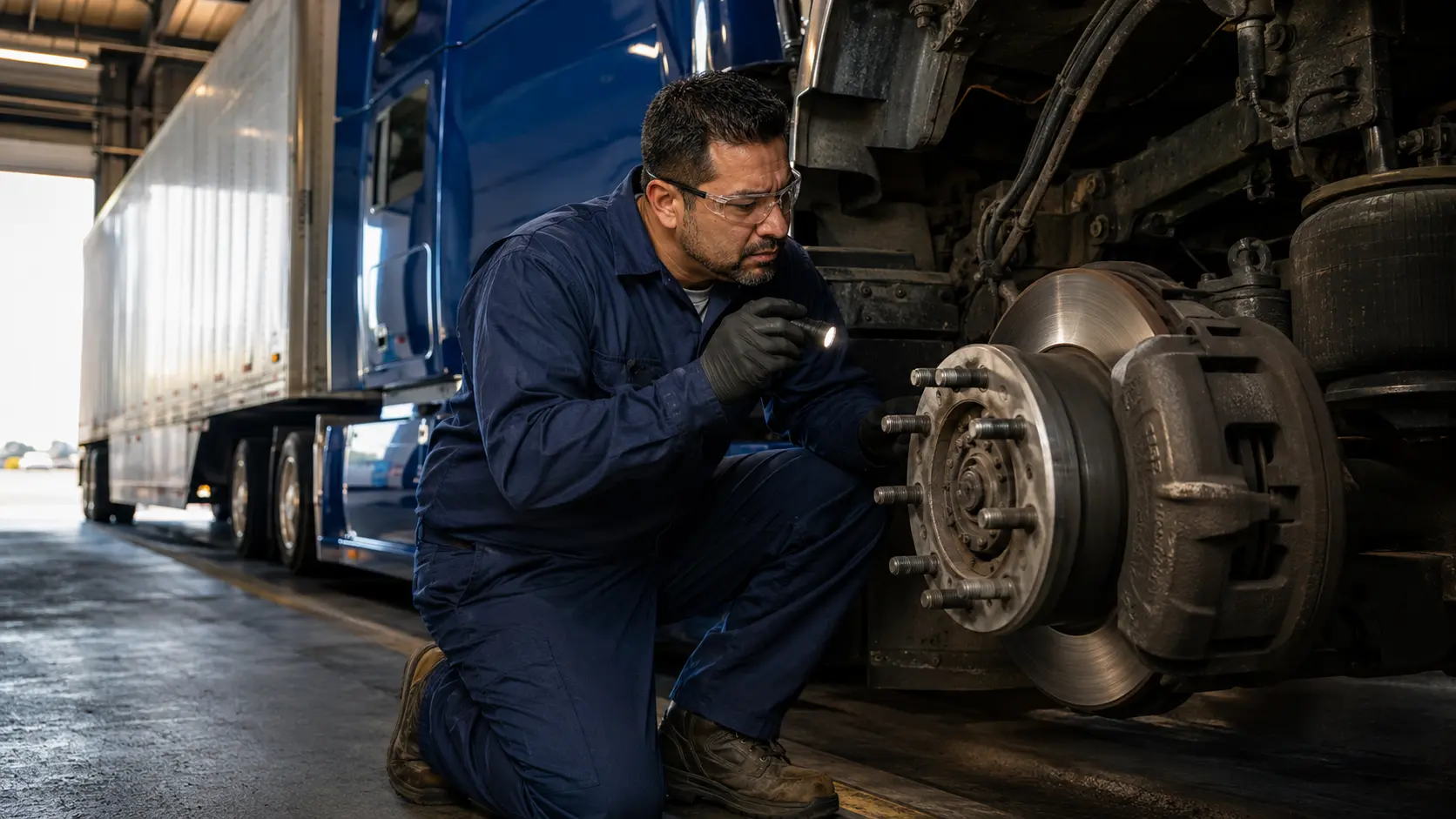
The Commercial Vehicle Safety Alliance's 2026 Brake Safety Week runs from August 23 through August 29. Certified inspectors in the United States, Canada, and Mexico will conduct routine commercial-vehicle inspections with added attention on brake systems. This year's announced focus is the condition of brake drums and rotors.
The week does not create a new maintenance rule or a special exemption for getting to a repair shop. It concentrates inspection and education on requirements that apply throughout the year. For an owner-operator or small dry-van fleet, the useful response is a documented inspection by qualified people—not a rushed cosmetic check at the truck stop.
Key facts for August 23-29
- Inspectors will perform normal commercial-vehicle inspections, with brake systems receiving special attention.
- Vehicles with brake-related or other out-of-service conditions can be restricted from travel until repairs are completed.
- CVSA's 2026 focus is visible drum and rotor condition, including cracks, missing pieces, severe rust, grooves, and excessive wear.
- Both the tractor and trailer matter; a recently leased or picked-up trailer should not be assumed road-ready.
- Drivers should report defects, while brake inspection and repair responsibility belongs with properly qualified personnel.
Step 1
Why drums and rotors are the 2026 focus
CVSA says drum and rotor problems can reduce brake efficiency, and broken material can separate from a moving vehicle. Its official 2026 flyer tells drivers and operators to examine visible surfaces during pre- and post-trip inspections and to look for cracked or missing material, heavy rust across a rotor's friction surface, metal-to-metal grooving, and wear that exposes a rotor's center vents.
Those observations align with federal brake rules. Under 49 CFR 393.47, brake components must be constructed, installed, and maintained for safe and reliable stopping. The rule addresses actuators, slack adjusters, linings or pads, and drums or rotors. Section 393.48 also requires brakes to remain operative.
Last year's results show why preparation matters. During the 2025 Brake Safety Week, CVSA reported 15,175 inspections and 2,296 vehicles placed out of service for brake-related violations—a 15.1% rate. The most-cited reason was an out-of-service condition affecting 20% or more of a combination's service brakes. That percentage is historical context, not a prediction of what inspectors will find in 2026.
Step 2
Driver walk-around: visible checks before dispatch
A driver's walk-around can catch warning signs, but it is not a substitute for a qualified brake inspection. Park on a level surface, secure the vehicle against movement, use appropriate lighting, and do not place yourself under or between equipment that is not safely supported and protected from movement.
| Area | What the driver can check | Escalate when |
|---|---|---|
| Air system | Listen for leaks; confirm warning devices and pressure behavior during the carrier's approved air-brake test. | Pressure will not build or hold normally, a warning device fails, or an audible leak is present. |
| Hoses and tubing | Look for chafing, kinks, bulges, cracks, loose routing, and contact with moving or hot parts. | A hose is damaged, leaking, improperly joined, or rubbing where failure could occur. |
| Drums and rotors | Use a light to view accessible surfaces for cracks, missing pieces, severe rust, grooves, or discoloration. | Any broken material, crack, metal-to-metal groove, exposed vent, or uncertain condition is visible. |
| Linings and pads | Observe accessible areas for obvious thinness, contamination, missing material, or uneven wear. | Material appears loose, soaked with oil or grease, missing, or below an approved service limit. |
| Brake hardware | Look for missing, loose, damaged, or displaced visible components and abnormal pushrod position. | Hardware is missing or movement looks different side-to-side; do not make an unqualified adjustment. |
| Trailer connection | Confirm gladhands are seated, seals look serviceable, lines are supported, and the trailer-brake response is normal. | Connections leak, lines drag or bind, or the trailer does not respond correctly. |
Also note pulling, vibration, delayed release, burning odor, smoke, unusual heat, or a change in stopping feel. Do not continue simply because the truck still moves. Report the symptom and have the cause evaluated before the next dispatch.
Step 3
Shop checklist: inspect the whole combination
Federal rules require motor carriers to systematically inspect, repair, and maintain vehicles under their control. For Brake Safety Week preparation, give the technician enough time to check the tractor and the trailer as one operating combination. A useful work order should identify the unit, date, findings, measurements where applicable, repairs, parts, and the person who completed or approved the work.
- 1
Measure—not guess
Have a qualified person verify lining or pad thickness, drum or rotor condition, pushrod travel where applicable, and adjustment against the correct specifications.
- 2
Inspect every wheel end
A clean steer axle does not clear the drives or trailer. Compare components across each axle and investigate uneven wear, oil or grease contamination, and heat evidence.
- 3
Test the air system and protection devices
Check for leakage, proper pressure buildup, warning operation, tractor protection, trailer emergency function, and service-brake response using an approved procedure.
- 4
Review hoses, chambers, and hardware
Verify routing, securement, chamber condition, matching components where required, and that no part is cracked, loose, missing, or contacting another component.
- 5
Close the paperwork loop
Record defects and repairs in the carrier's maintenance system. Keep evidence of the qualifications required for employees responsible for brake inspection, maintenance, service, or repair.
CVSA's flyer specifically says repairs should follow the brake manufacturer's requirements. An annual inspection sticker is useful, but it does not prove that a brake remained compliant after months of service. Current condition controls.
Step 4
Dry-van carriers: do not overlook the trailer
Small carriers often focus on the tractor because they know its maintenance history. The trailer may have changed hands, sat for a period, or accumulated defects between scheduled services. Before accepting a rental, interchange, or unfamiliar trailer, confirm its current annual-inspection status and conduct a real pre-trip check.
At pickup
Check air lines and seals, listen for leaks, test trailer brake response, examine accessible wheel ends, and photograph/report defects before leaving.
After loading
Recheck line clearance, coupling, tire and wheel condition, lights, and anything that may have changed while the equipment was moved or loaded.
After a repair
Obtain the repair order and verify that the reported defect—not only the symptom—was addressed before returning to service.
During the trip
Treat heat, odor, smoke, pulling, vibration, warning lights, or abnormal air behavior as a stop-and-investigate event.
Step 5
What happens after a roadside inspection report
If a vehicle is declared out of service, it cannot be operated until the required repairs are satisfactorily completed. Federal rule 49 CFR 396.9 also establishes a paperwork trail. A driver must deliver or transmit the inspection report to the carrier after reaching the next terminal or facility—or within 24 hours if the driver will not reach one in that period.
The carrier must examine the report and correct the noted violations or defects. Within 15 days, the carrier must certify that corrections were made and, when requested by the issuing state agency, return the completed form. A copy must be retained for 12 months. Build this into dispatch procedure now so the report does not remain in a cab pocket.
Step 6
A simple 24-hour preparation plan
- 1
Assign each active tractor and trailer
Create a unit list and name the driver or technician responsible for completing the check. Include spare and recently rented equipment.
- 2
Complete the driver inspection
Use the carrier's normal pre-trip procedure plus the visible drum, rotor, hose, lining, connection, and air-system checks above.
- 3
Route defects to qualified maintenance
Do not coach a driver to turn an automatic slack adjuster or improvise a repair. Park questionable equipment and obtain a qualified evaluation.
- 4
Verify repair documentation
Match the repair order to the unit and defect, then retain it in the maintenance file. Tell dispatch when the unit is actually cleared.
- 5
Brief the driver
Confirm the driver knows how to report an inspection, who to call after hours, and that an out-of-service vehicle cannot continue until the cited condition is repaired.
Bottom line
Prepare the equipment, the driver, and the records
Brake Safety Week increases attention, but safe brakes are a daily obligation. A careful driver walk-around, a complete tractor-trailer inspection by qualified personnel, prompt repair, and usable records are more valuable than any last-minute shortcut.
For dry-van freight service with ONENESS TRANSPORT LLC, call 512-363-3649 or email dispatch@onenesstransport.com.
Official sources
- CVSA announcement: Brake Safety Week scheduled for August 23-29, 2026
- CVSA 2026 Brake Safety Week drum-and-rotor flyer
- CVSA 2025 Brake Safety Week results
- eCFR: 49 CFR Part 393, Subpart C—Brakes
- eCFR: 49 CFR Part 396—Inspection, Repair, and Maintenance
This article is general informational material, not legal, mechanical, insurance, or safety-certification advice. Use the current regulations, applicable out-of-service criteria, manufacturer instructions, and qualified inspection and repair professionals for your equipment. ONENESS TRANSPORT LLC has no paid relationship with CVSA or the agencies cited in this article.